
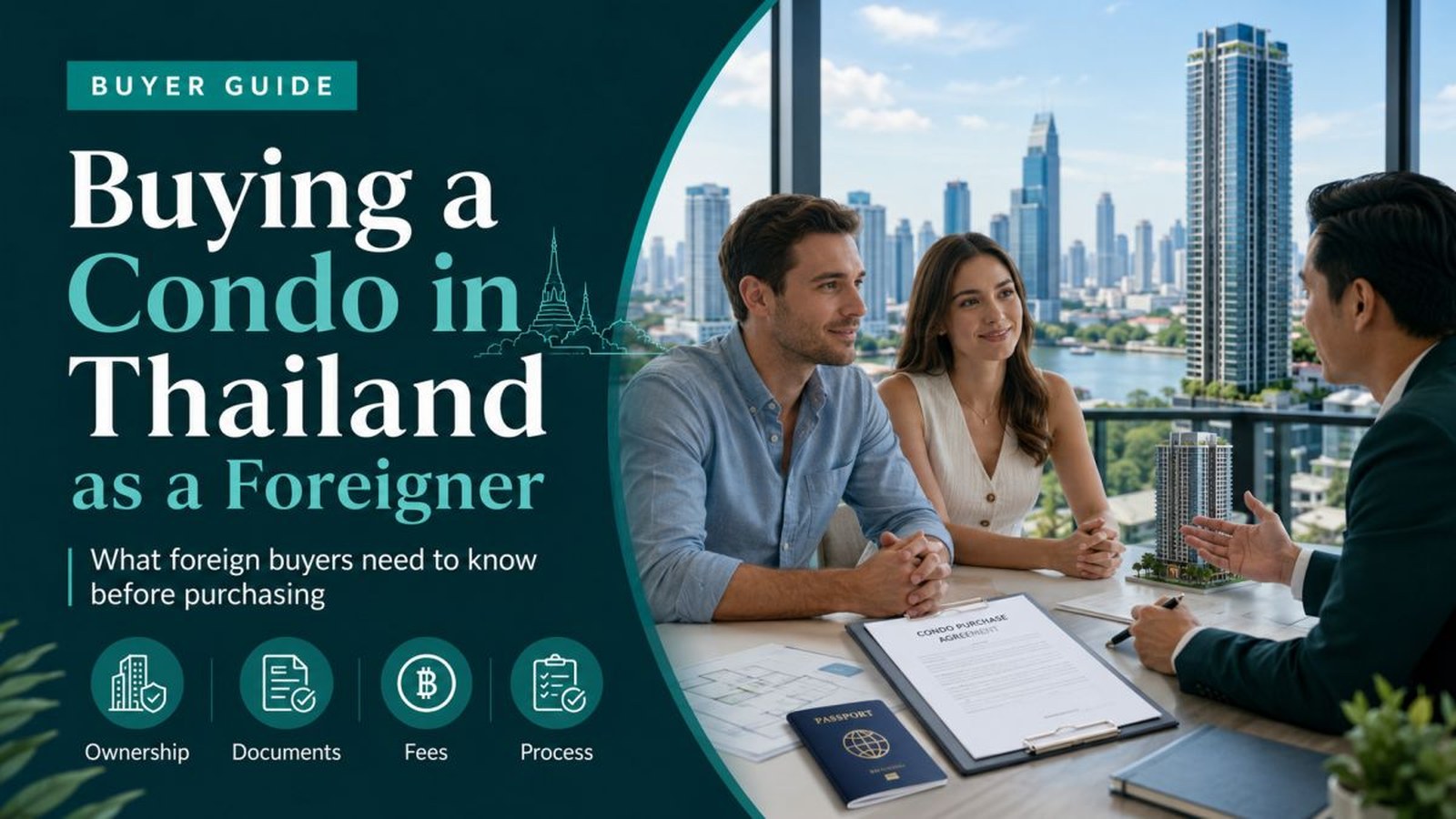
Buying a Condo in Thailand as a Foreigner
A practical foreign buyer guide to Thailand condo ownership, due diligence, funds transfer, and common purchase checks.
Key takeaways
- Foreigners can buy condominiums in Thailand under specific rules, but every purchase should be checked carefully. Focus on ownership quota, funds transfer documents, title, contract terms, project condition, and long-term fit before reserving or transferring money.
Buying a condo in Thailand as a foreigner can be straightforward when the project, ownership structure, documents, and payment process are clear. But it should never be rushed. A condo purchase is not only about liking the room or getting a good price. Buyers need to understand ownership quota, transfer documents, building condition, developer or seller reliability, and long-term use.
This guide gives a practical overview for foreign buyers before comparing current ThaiProps sale listings or private developer deals.
Key takeaways
- Foreigners can usually buy condo freehold only within the building’s foreign ownership quota.
- Funds transfer documentation matters for freehold condo registration.
- Always check title, quota, contract terms, fees, and building condition.
- Do not rely on rental yield claims unless backed by comparable evidence.
Understand foreign ownership quota
Foreign buyers commonly focus on freehold condominium ownership, but freehold ownership depends on the foreign quota available in the condominium. Before committing to a unit, ask whether the unit can be transferred under foreign quota and confirm this through proper documents and professional checks.
If a unit is not available under foreign quota, the structure may be different and should be reviewed carefully. Do not assume every unit in every condo can be bought the same way.
Check funds transfer requirements
Foreign condo purchases usually require proper evidence that funds were transferred into Thailand for the purchase. Buyers should speak with the bank, legal advisor, and seller or developer before transferring funds so the purpose, currency, recipient, and documentation are handled correctly.
This is one area where small mistakes can create delays. Before sending money, confirm what document will be needed at transfer and how the payment should be described.
Due diligence before reserving
Before paying a reservation or deposit, check the seller, title status, project condition, transfer fees, sinking fund, maintenance fee, outstanding payments, furniture list, and contract terms. For resale units, inspect the actual room carefully. For new developer units, review construction status, payment schedule, handover terms, and what is included.
If the purchase is for investment, do not depend only on marketing yield. Ask for comparable rent evidence, realistic vacancy assumptions, building demand, and resale context.
Choose based on use case
A condo for personal use is different from a condo for rental investment. End users should focus on lifestyle, commute, comfort, building management, and long-term maintenance. Investors should focus on tenant demand, liquidity, building age, unit layout, competition, and realistic rental evidence.
ThaiProps can help buyers compare current sale listings and private developer offers, but buyers should complete independent legal and financial checks before purchase.
Search condos for sale in Thailand
Compare current ThaiProps sale listings and private developer offers before shortlisting.
Common questions
Can foreigners buy condos in Thailand?
Foreigners can commonly buy condominium freehold within the building’s foreign ownership quota, subject to proper checks and transfer requirements.
Should foreign buyers use a lawyer?
For a purchase, legal review is strongly recommended so title, quota, contract, fees, and transfer conditions are checked properly.
Can foreigners buy any condo unit they like?
No. The unit must fit the applicable ownership structure, and foreign freehold depends on quota availability and proper documentation.
