
Freehold vs Leasehold Condo in Thailand
A practical guide to understanding freehold and leasehold condo options in Thailand before buying.
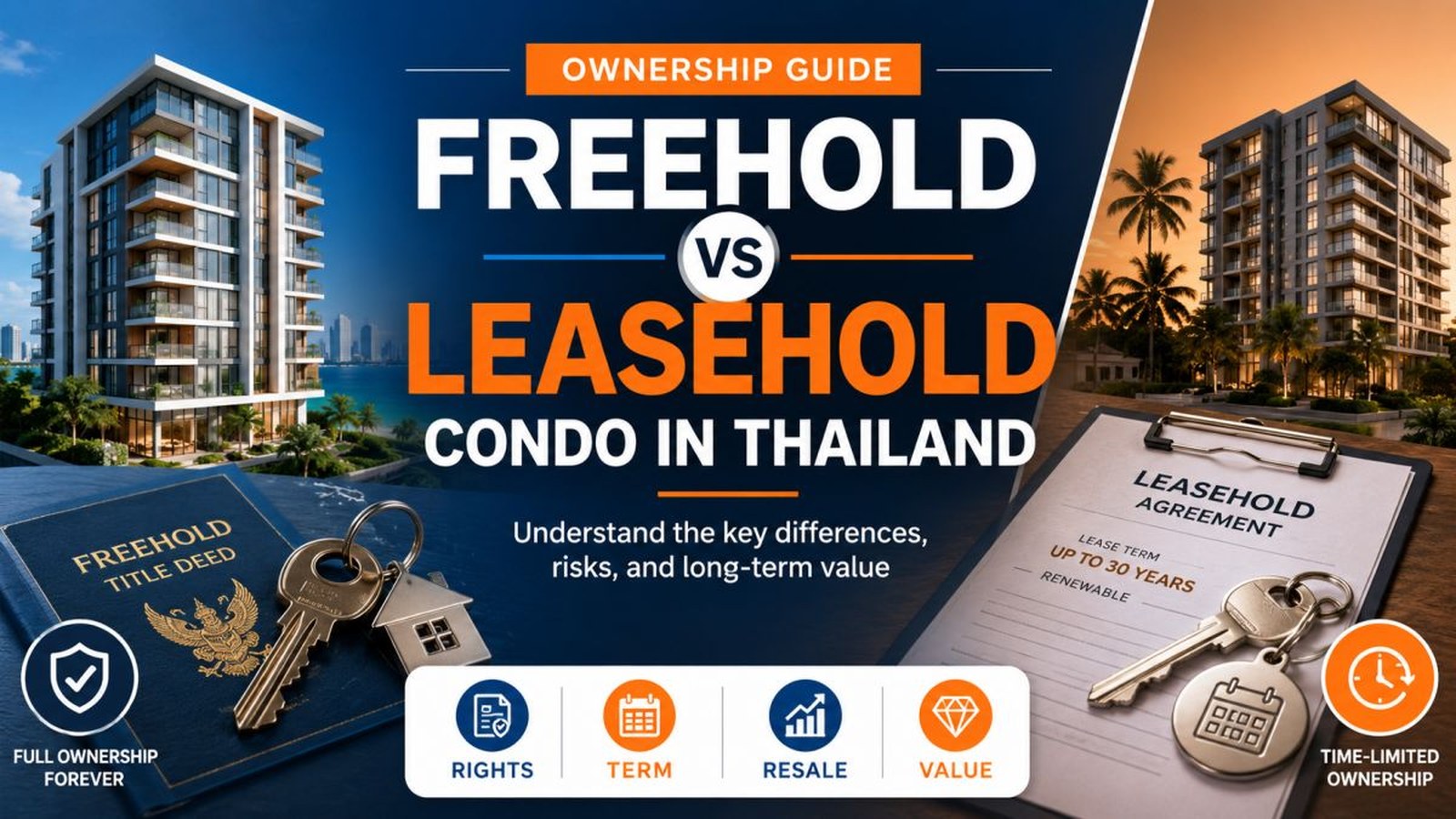
Key takeaways
- Freehold and leasehold are different ownership structures with different risk, flexibility, financing, resale, and long-term value considerations. Buyers should understand the structure before comparing price or signing.
Freehold and leasehold are two of the most important words buyers will see when looking at condos in Thailand. They can affect ownership rights, resale, financing, long-term value, and buyer confidence. The cheapest price is not always the best deal if the ownership structure does not match your plan.
This guide explains the practical difference in simple terms before buyers compare current listings or developer offers.
Key takeaways
- Freehold generally means ownership of the unit, subject to legal and condominium rules.
- Leasehold usually means the right to use the property for a defined period.
- Foreign freehold condo ownership depends on quota and documentation.
- Leasehold terms should be reviewed carefully before purchase.
What freehold means for condo buyers
Freehold condominium ownership is often the preferred structure for buyers who want clearer long-term ownership and resale flexibility. For foreign buyers, freehold condo purchase is usually discussed together with foreign quota, funds transfer documentation, and title transfer process.
Even with freehold, buyers should still check building condition, management, common fees, sinking fund, title status, contract terms, and future maintenance risk.
What leasehold means
Leasehold generally means the buyer receives rights for a defined period rather than full ownership of the unit in the same way as freehold. Leasehold can be used in some projects or ownership situations, but the exact rights, term, renewal conditions, transferability, and registration details matter.
Buyers should not compare leasehold and freehold only by price. A lower entry price may reflect a different rights structure and different long-term value.
Questions to ask before choosing
Ask what exactly is being sold, how the right is registered, how long the term lasts, whether it can be transferred or inherited, what happens at expiry, what fees apply, and whether financing is available. For freehold, ask about quota, title transfer, fees, and funds transfer documents.
For both structures, legal review is important. Marketing language can be simplified, but contracts control the real rights.
Which one fits your plan?
End users who want long-term personal use may prefer different features than investors focused on exit value. Investors should think carefully about resale demand, buyer pool, building age, remaining lease term if leasehold, and realistic rental evidence.
ThaiProps can help buyers discover current sale listings and secret developer offers, but ownership structure should always be verified before purchase.
Compare current sale listings
Search ThaiProps sale listings and check ownership details before making a purchase decision.
Common questions
Is freehold better than leasehold in Thailand?
Freehold is often preferred for long-term ownership and resale flexibility, but the right choice depends on buyer goals, price, terms, and legal review.
Can foreigners buy freehold condos?
Foreigners can commonly buy condo freehold within the foreign ownership quota, subject to proper documentation and transfer requirements.
Should leasehold contracts be reviewed by a lawyer?
Yes. Leasehold rights, term, renewal, transferability, and expiry conditions should be reviewed carefully before purchase.
