
Industrial Land and Factory for Sale in Thailand: What to Check
A factory purchase is a site-fit decision before it is a price negotiation. Check the land, building, operating requirements, access and handover evidence.
Key takeaways
- A factory can look right in a photograph and still fail your operation. Before comparing asking prices, write down what the business needs the land and building to do. Then separate three questions: what is being sold, whether your intended use is permitted, and what it will cost to make the site usable.
A factory can look right in a photograph and still fail your operation. Before comparing asking prices, write down what the business needs the land and building to do. Then separate three questions: what is being sold, whether your intended use is permitted, and what it will cost to make the site usable.
Describe the operation before choosing the plot
Give the agent or seller a practical operating brief: goods or production process, storage method, delivery vehicles, staffing, operating hours and the utilities that matter. Identify future expansion needs and any process-specific environmental or safety concerns. A generic request for a large factory does not communicate those constraints.
Use the brief to shortlist sites by geography, usable building space, access and evidence available. Compare land area separately from usable factory area. Ask whether the advertised price includes the building, installed systems, machinery or only the land; these are not interchangeable offers.
Verify the parcel and the right to sell
Have a qualified property lawyer examine the title, seller identity, authority to sign, registered rights, encumbrances and access arrangements. Match the legal parcel and boundaries with the site you inspected. A visible driveway does not by itself establish the legal right to use it.
If the buyer is foreign-owned or the transaction involves a special ownership route, obtain advice on the exact eligibility and approvals before paying. An advertisement saying industrial estate is not a legal determination that the land, buyer or transaction qualifies for a particular benefit.
Separate the existing building from permission for your business
Request the available building, land-use and operating documents and have the relevant authority or adviser assess them against your actual activity. Existing occupation, a previous factory use or a seller’s assurance is not proof that a new process can operate unchanged.
For a site in an IEAT industrial estate, the authority’s One Stop Service Center is a relevant starting point for location and permission questions. IEAT describes both utilities and land-use administration as part of the estate context. That does not mean every advertised factory has all the approvals your business requires.
Inspect access, utilities and the cost of becoming operational
Walk the loading route, gate, turning areas and internal circulation with someone who understands the vehicles. Ask a qualified engineer to assess structure, floor performance, roof condition, drainage, fire-safety provisions and the capacity needed for your process. Do not turn an unverified listing specification into an engineering conclusion.
Request evidence of utility capacity and connection conditions. Record upgrades, surveys, fit-out, reinstatement and professional fees in the comparison. A lower purchase price can lose its advantage if required works or uncertain approvals delay opening; treat that as a scenario to test, not a predicted outcome.
Negotiate around the remaining conditions, not around assumptions
Make the offer clear about what is included, the documents still required, inspections, approval dependencies and the proposed completion process. Ask your lawyer to explain conditions, deposits and consequences before you commit. Record responsibility for vacant possession, machinery removal, defects, keys and utility handover.
Use ThaiProps industrial listings to identify properties for investigation, not to skip due diligence. After completion, keep the approved documents, surveys and handover records accessible to the team responsible for operations and maintenance.
Your working checklist
| Decision | What to record |
|---|---|
| Operating fit | Process, goods, staffing, vehicles and future capacity |
| Legal property | Parcel, title, seller authority, registered rights and legal access |
| Permissions | Documents and authority confirmation for the intended activity |
| Technical fit | Independent inspection, utilities, safety and required works |
| Commercial handover | Included assets, conditions, deposits, completion and operating records |
Take the next step with ThaiProps
Build an industrial shortlist, then request the documents each site needs.
Sources and further checks
Source pages checked on 18 October 2026. Guidance is a starting point, not transaction-specific advice.
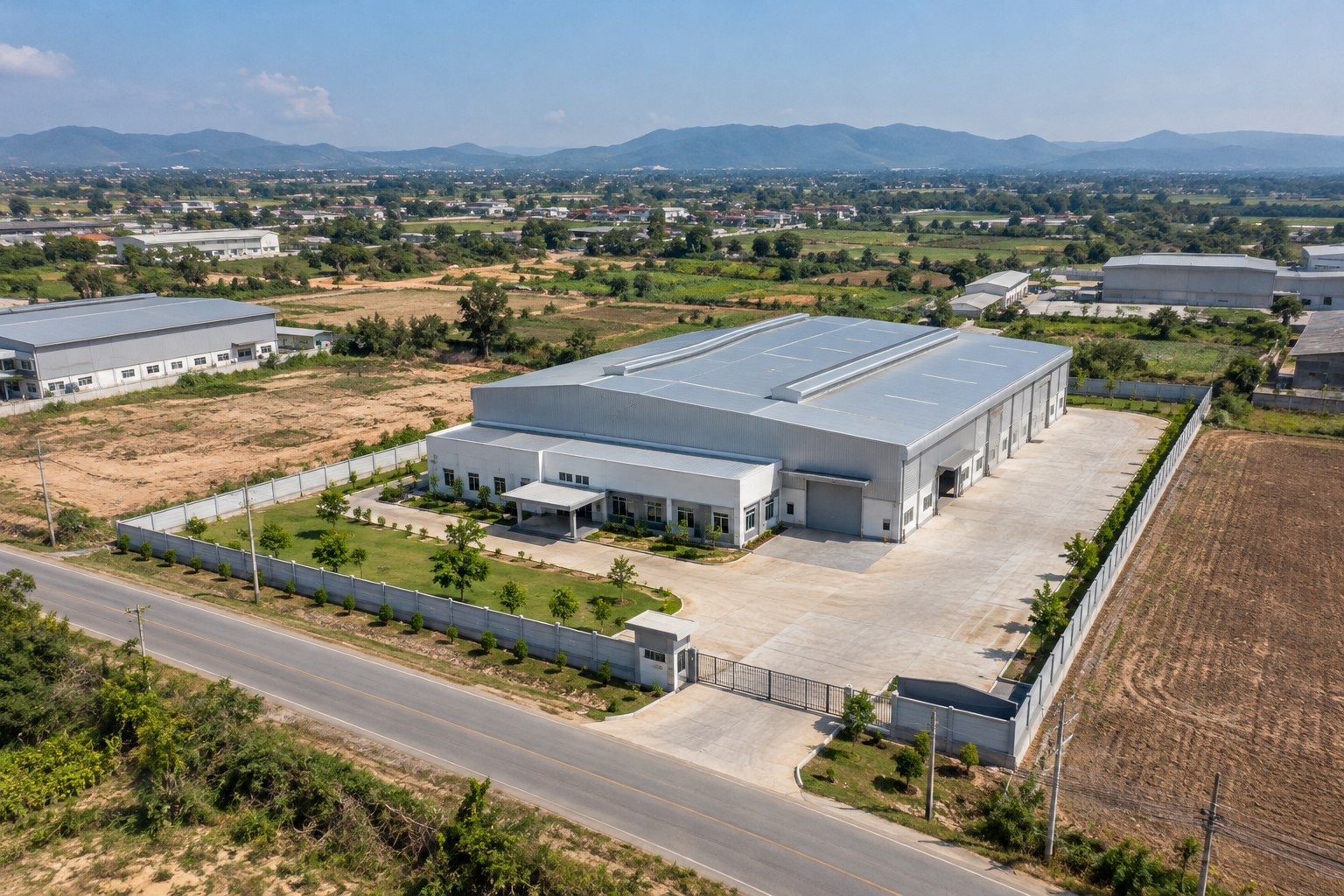
Cover image: generated editorial illustration, not a verified listing photograph or actual customer transaction.
Common questions
Is buying a factory the same as buying industrial land?
No. Establish exactly which land, buildings, systems and other assets are included. Compare parcel area separately from usable building area and record exclusions.
Does an existing factory use prove that my business can operate there?
No. Have the intended activity assessed against the relevant permissions, building conditions and technical requirements. A previous occupier may have had a different operation.
What should a viewing include?
Inspect the real delivery route, gate, loading, circulation, building condition and utilities. Use qualified technical advisers for capacity and compliance questions rather than relying on photographs.
Where does IEAT fit into the checks?
For sites within its industrial-estate remit, IEAT provides guidance and permission-related services. Confirm the particular estate and transaction rather than assuming its rules apply to all industrial property.
