
How to Compare Property Prices in Thailand
Put asking prices, area definitions, condition and included costs on the same sheet before choosing a viewing shortlist.
Key takeaways
- Compare similar homes, label each price and area basis, and keep dated source links. Read price per square metre alongside the total budget and verified differences between the properties.
To compare property prices in Thailand, start with similar homes and equivalent advertised terms. Record the exact property, date, area definition, condition and included costs. Calculate a price per square metre where the area basis is clear, then use the comparison to decide what to investigate or view.
Choose homes that could serve the same purpose
Write down your budget, intended move date, household needs and daily destinations. For a condo search, begin with the same project or a closely defined location, similar bedrooms and a comparable size range. Give houses, condos, land and industrial sites comparison groups suited to their own characteristics.
Ask the agent why each alternative belongs on the shortlist. A different advertised amount may come with a different layout, condition, proposed term or practical journey. Keep those differences visible and decide which trade-offs suit your brief.
Give every figure a source and a date
Keep the exact listing link, advertised amount and date checked. Label the evidence as an asking rent, asking sale price, documented agreed amount or another type of figure. Ask the responsible contact to confirm the current proposal and availability before arranging a visit or relying on it in an offer.
Check whether repeated advertisements describe the same home. Put possible matches into a question list until identity is confirmed. Counting one home several times gives it extra weight in a small comparison. Retain the original links so someone else can check your working.
Check the area before dividing the price
Ask what the stated area measures and where it comes from. Record indoor floor area, land area and other quoted areas separately. Use a consistent area basis and unit for the calculation. If these are unclear, request the relevant plan or record and leave the calculation pending.
Consider this hypothetical rental comparison. Home A is advertised at ฿30,000 per month for 60 m², giving ฿500 per m² per month. Home B is advertised at ฿28,000 per month for 50 m², giving ฿560 per m² per month. Home B has the lower monthly asking rent. Home A has the lower asking rent per square metre. Layout, inclusions and the client’s budget still need consideration.
For a sale comparison, divide the asking sale amount by the verified comparable area and label the result as an asking price per square metre. Keep rental and sale calculations in separate columns with their periods and evidence types stated.
Explain the differences behind the figures
Record condition, age, floor, usable layout, furnishing and access where they affect your decision. At the viewing, check the space and request supporting information for material claims. Refer technical or valuation questions to the appropriate specialist.
Build the budget alongside the advertised price. Confirm the proposed term, inclusions, recurring charges, payment dates, deposit arrangements and work expected before handover. Record the amount, period and responsible party for each item. Keep unknown amounts open until confirmed.
Use the comparison to decide the next step
Mark which homes fit the brief, which fail it and which need evidence. Ask the agent or owner to resolve important gaps before proceeding. Use verified comparisons to frame questions about the proposed price and terms, then have the relevant parties review the written offer, contract and payment responsibilities.
At handover, check the delivered condition and inclusions. Record keys, inventory, meter readings and unfinished work. For a tenancy, agree the repair contact and any continuing support, and keep renewal and move-out responsibilities with the property record.
Read market context with its scope in view
The Bank of Thailand’s residential property price index methodology accounts for differences such as size, age, location and type when measuring price changes. It supports care in comparing different homes. Use the published index for market context and assess an individual option through its own evidence.
Sources checked on 21 November 2026. Read the Bank of Thailand methodology. Use ThaiProps search to identify candidates and retain their exact links. The Bangkok neighbourhood comparison guide connects the shortlist with an everyday routine.
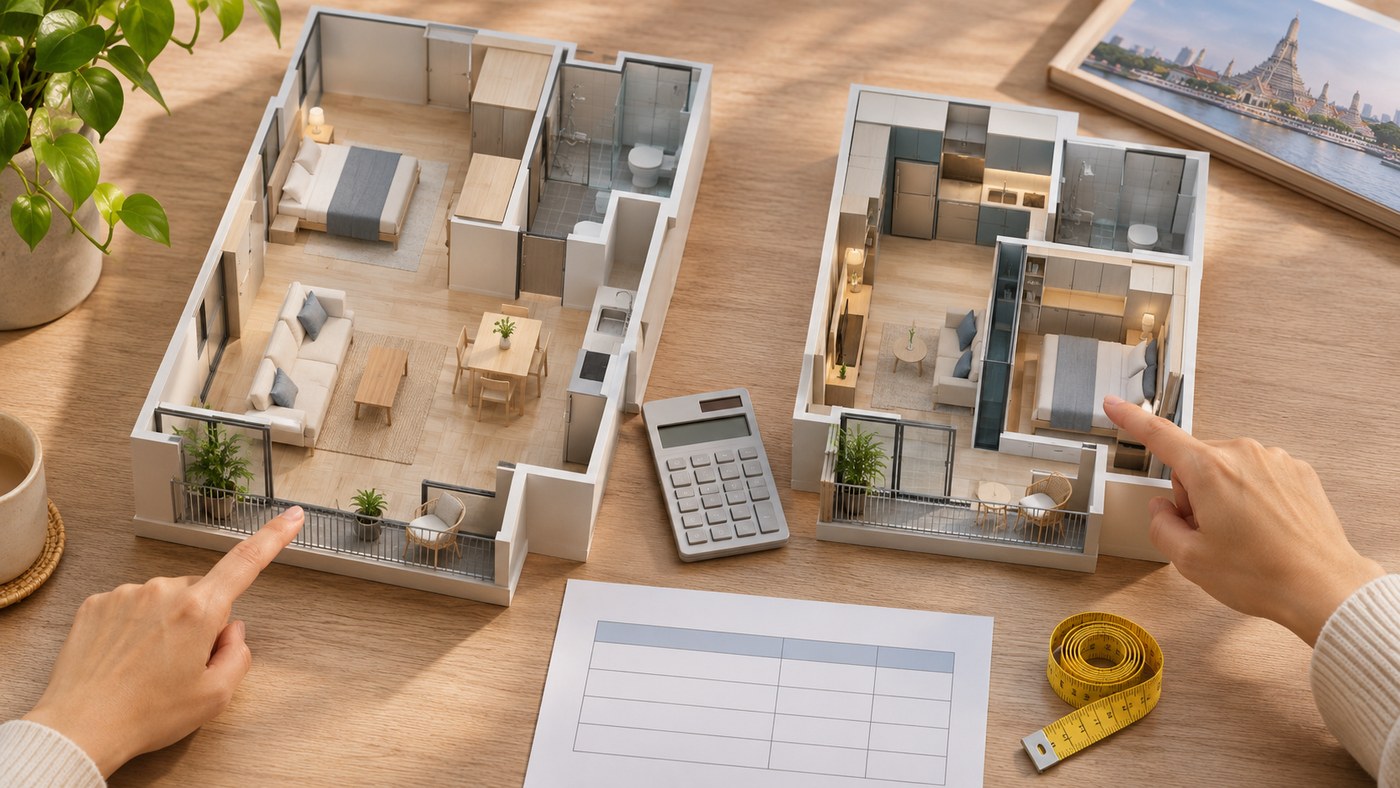
The rental figures above are original hypothetical examples. Cover image: generated editorial illustration using two apartment models to represent a property comparison.
A comparison you can check later
| Record | Question to resolve |
|---|---|
| Identity and date | Which exact home does this advertisement describe, and when was it checked? |
| Price basis | Is this an asking rent, asking sale amount or another type of evidence? |
| Area basis | What was measured, in which unit, and from which record? |
| Practical differences | How do condition, layout, location and inclusions affect your use? |
| Budget and next step | Which costs and terms are confirmed, and who will resolve the remaining questions? |
Common questions
Does the lowest price per square metre identify the best home for me?
Use it alongside the total budget, usable layout, condition, location and included terms. A home can have a lower area-based asking price while exceeding your monthly budget or failing an essential requirement.
What should I do when the advertised areas have different definitions?
Ask what each area includes and request its source. Keep floor area and land area separate. Calculate comparable figures once the measurement basis and unit are clear.
How should I use a property price index for an individual home?
Use the published index for context about the market and period it measures. Investigate the individual property’s facts, current proposal, comparable evidence and condition before making a decision.
Build a shortlist with traceable evidence
Find candidate homes, retain the exact links and use the comparison record to prepare your next questions.
